“I believe with my whole heart that midlife is not a decline. It truly is a beginning and I want women to know that their best years are absolutely still ahead.”
Women’s health is finally getting the attention it deserves – but so is the flood of misinformation telling women what to do with their bodies. Dr. Rewa Keegan, specialist doctor, board-certified lifestyle medicine physician, and health coach, is helping women cut through the noise.
After starting her career in surgery, Dr. Keegan was driven to understand the bigger picture of health (beyond the scalpel) in a field where women’s health is too often overlooked. Guided by both clinical experience and personal insight, she transitioned into lifestyle medicine to deliver more holistic, evidence-based care.
Today, as founder of Revital Wellbeing Medicine, she supports women through midlife and beyond with an approach that blends medical expertise, lived experience, and science-backed strategies – helping women not just feel better, but feel their best.
Through her practice and platforms, Dr. Keegan challenges misinformation and translates science into action. Honest, direct, and deeply compassionate, her message is simple: women deserve better – better information, better care, better support, and the opportunity to feel thrive. Because as she puts it – and lives it– a woman’s best years aren’t behind her, they’re ahead.
Meet Rewa. This is her story.
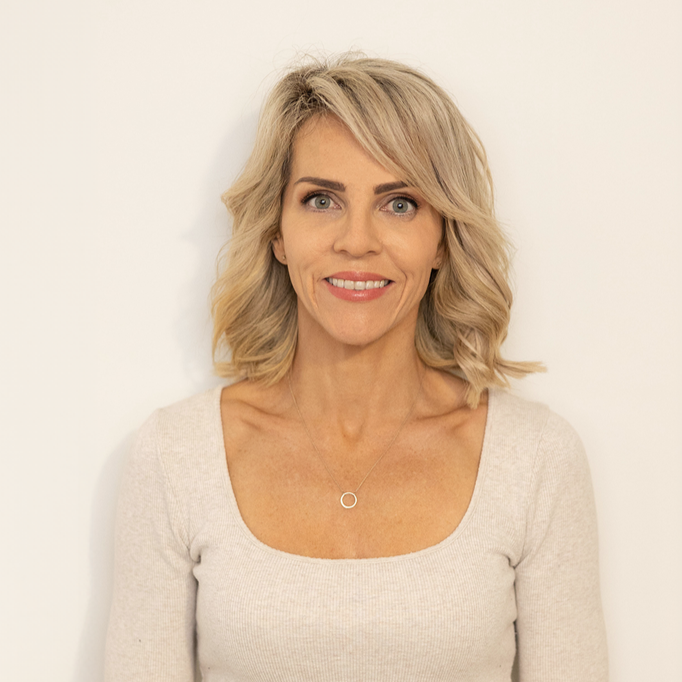
P: Please introduce yourself!
R: Hi! I’m Dr Rewa Keegan, also known as “Re.”
I’m a medical specialist (I trained as a general surgeon and work in breast care now), lifestyle medicine physician, mum of twins, accidental soccer mum (who still does not fully understand the offside rule), and someone who is pretty obsessed with midlife women’s health. I’m the founder of Revital Wellbeing Medicine - my own practice dedicated to this.
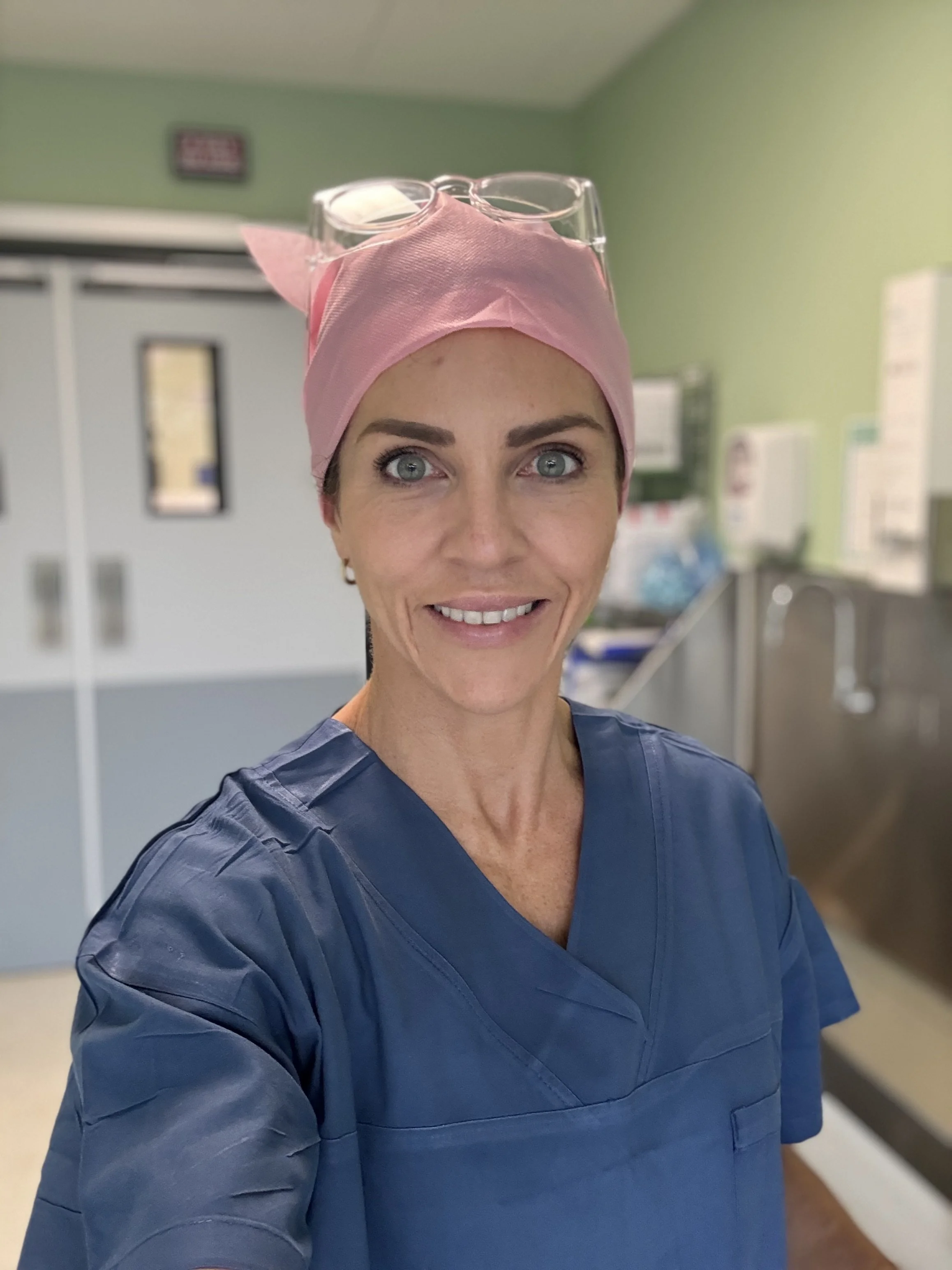
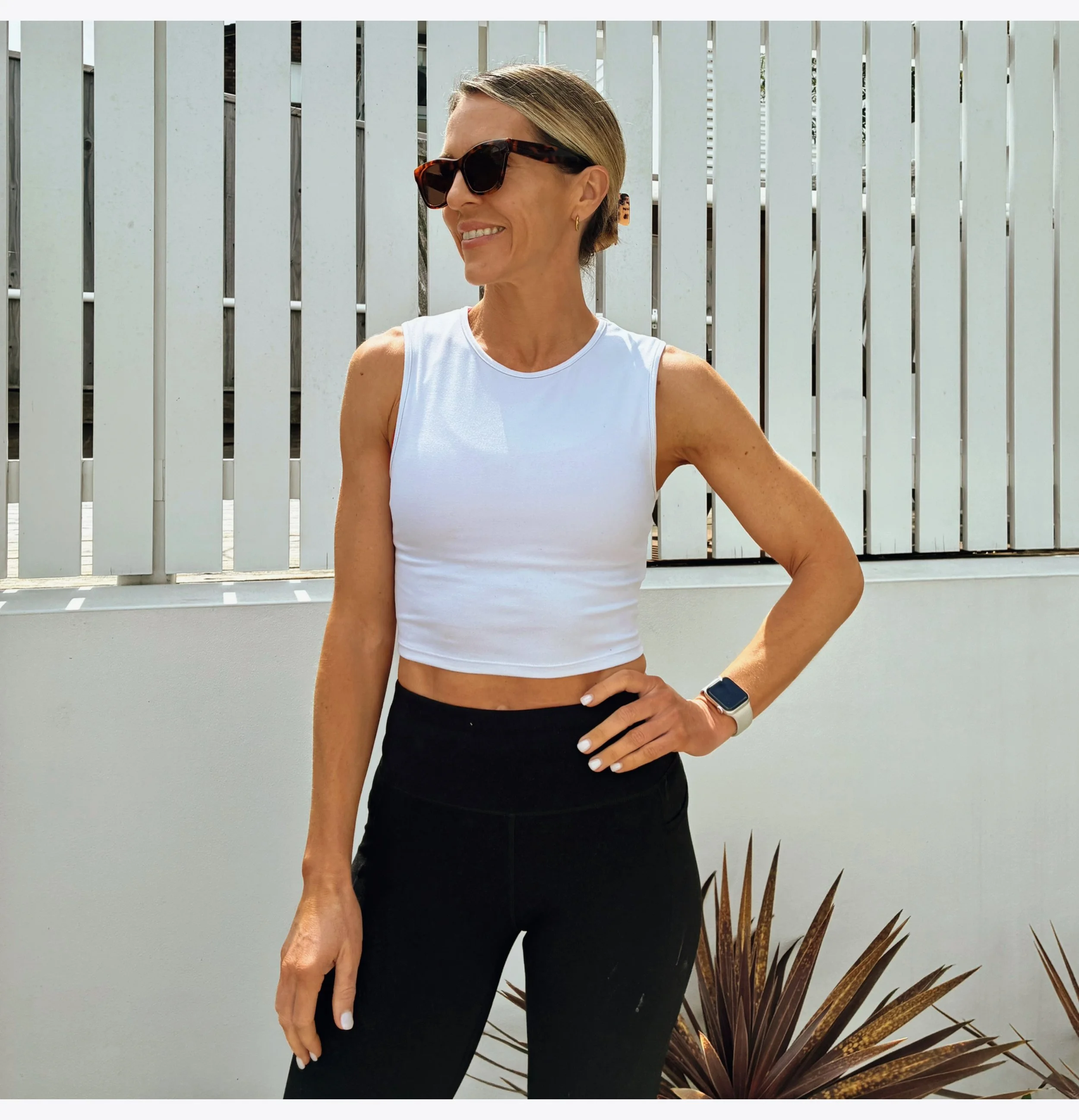
I live on the Northern Beaches of Sydney, which I am convinced is the most beautiful place on earth. I smile every single day because I get to see the ocean. I train for Hyrox, love it completely, and declare after every race that I will absolutely never do it again. I talk too fast, I listen to true crime podcasts, I am genuinely blessed to have an extraordinary network of women in my life who inspire me constantly, and I find so much pleasure in my morning cup of coffee (it’s the little things that bring joy).
My passion is helping women rebuild their capacity during that chapter of life when demands are at an all time high and their own health is usually the last thing on the list. I do this through my clinical practice, through speaking and through an Instagram account that started as a little experiment and has somehow turned into something I genuinely love.
I believe with my whole heart that midlife is not a decline. It truly is a beginning and I want women to know that their best years are absolutely still ahead.
P: Take us through your journey into healthcare. Did you always know you wanted to become a doctor?
R: Yes. And no. As a child I was completely fascinated by the human body. My favourite show at age eight was Doogie Howser MD, which tells you everything you need to know about me. I come from an entirely non-medical family and my parents get woozy at the sight of blood, so they probably thought I was an incredibly weird child.
Things took a left turn when I decided as an angsty teenager that I actually wanted to be an actress (cue dramatic lights). So, off I went to a performing arts high school, studied drama for two hours a day, made incredible friends and loved every single minute of it. At some point I decided I should probably have a backup job – just in case moving to Hollywood, marrying Leo DiCaprio and getting an Oscar didn’t work out – and medicine still seemed like a reasonable option.
I was always drawn to surgery specifically. I saw it as the ultimate pinnacle of medicine and I wanted to be at that pinnacle. I’m a person who loves doing hard things apparently. So I did the work, got into medical school at the University of Sydney, completed my surgical training and became a Fellow of the Royal Australasian College of Surgeons.
And then, after all of that, I honestly felt a bit… lost. I had given up my glorious youth and spent years training in this most intricate and high pressure specialty but something felt a bit empty. I always wanted to truly help people, and it wasn’t that surgery couldn’t do that, its just that the small problems I could fix with a scalpel felt far away from the more complex whole person issues I was seeing in my patients. Then (at a very low point in my own life) I discovered lifestyle medicine. The science of how the way we live affects how we feel. The whole person approach that surgery, by its nature, doesn't always have time for. And that was a huge turning point.
P: What drew you specifically to women’s health?
R: Honestly? I think partly because I am one, and mainly because I just love the way women communicate with each other, there’s a comfort and sisterhood that I am inherently very comfortable with. I specialized in breast surgery as its an almost exclusively female patient population and has allowed me to learn so much about women’s health in total (particularly in midlife).
But beyond that, its also because women have historically been poorly understood by medicine. We are finally acknowledging that “women are not small men”. The complex, multidimensional health issues women experience, particularly in midlife, require more care, more time and more curiosity than the system often allows for and that’s why I started my lifestyle medicine practice.
I genuinely love my patients. I work predominantly as a breast specialist, which means women come to me at some of the most confronting moments of their lives. And what I have always found is that yes, they are there about the clinical reason for their appointment, but what they really want is for someone to ask about the rest of it. The sleep. The exhaustion. The weight that won't shift. The feeling that something is just off.
I always joke that I am technically there about their boobs but what I am really interested in is everything else going on in their lives. My consultations with my long-term patients feel like a good catch up with an old friend (once the medical issues have been dealt with!).
Eight year old Doogie Howser obsessed wannabe-trauma- surgeon me did not plan for this to become what mattered the most. But now I cannot imagine anything else.
P: A big part of your platform is helping midlife women “rebuild their capacity.” What does that mean to you, and why is this mission so important?
R: It comes from a deeply personal place. For a long time my own capacity was gone. I was exhausted, depleted and running on empty while knowing exactly what the research said I should be doing. Knowing and doing are two very different things, and I had to learn that the hard way. In a sense I was my own first patient.
The way I use the word capacity is simple: it is your ability to meet the demands of your life without running yourself into the ground. I use the metaphor of a cup. When your cup is full, life feels manageable. You can absorb the unexpected, the sick child, the late deadline, the broken down car, and still have something left at the end of the day. When it is running low, those same things feel enormous. And when it is empty, you have nothing left for anyone, including yourself.
I also want to be honest about something. I have not arrived at some perfect place. My life now is busier and harder than it has ever been and I still have genuinely difficult days. What has changed is that I know how to look at myself honestly when things get turbulent and work out what actually needs attention. That is the difference.
Once I saw it in myself I started seeing it everywhere in clinic. Women coming to me saying "I just don't feel like myself anymore," desperate and confused because they had tried everything — the diets, the twelve week plans, the supplements, the transformations — and nothing had worked. And I began to understand why. Nobody was looking at the whole picture.
I think of health like an orchestra. There are brilliant specialists out there: hormone experts, nutritionists, personal trainers, sleep coaches, all playing their instruments beautifully. But modern healthcare has become so specialised and so fragmented that we sometimes forget to step back and look at things in totality. Without someone conducting the whole thing the sum of the parts doesn't always work. That is where I come in. I step back, look at everything together and work out where the capacity is actually eroding. Because it is rarely where you think it is.
What makes this feel urgent to me is that we don't really have a knowledge problem. The science exists. The information is out there. What we have is an implementation problem. Women aren't getting that information in a way that is clear, connected and actually usable in a real life. That is the gap I am trying to close.
P: You’re very open about your own health and fitness journey. How has your personal experience shaped the way you approach patient care and wellness?
R: After I had my twins I didn't exercise for nearly two years. Not a walk ( I could barely hobble around, I had horrible pelvic pain after pregnancy), not an exercise class, nothing. I was exhausted, I had extra baby weight, my cholesterol was high (which, as a doctor, I found equal parts ironic and humbling), and I had completely lost the thread of who I was physically. I was also completely exhausted from making and breastfeeding 2 humans and just felt depleted.
I didn't launch into some heroic transformation. I started walking. That was it. Just walking most days, low pressure, no plan. Then slowly, one small thing at a time, I started building. I eventually joined a gym. Started making better food choices and understanding how to fuel my body. Started really prioritizing sleep. Finally saying goodbye to alcohol. I also did what I do best - threw myself into more study so I could really understand at a fundamental level how these elements of capacity intersected and influenced health.
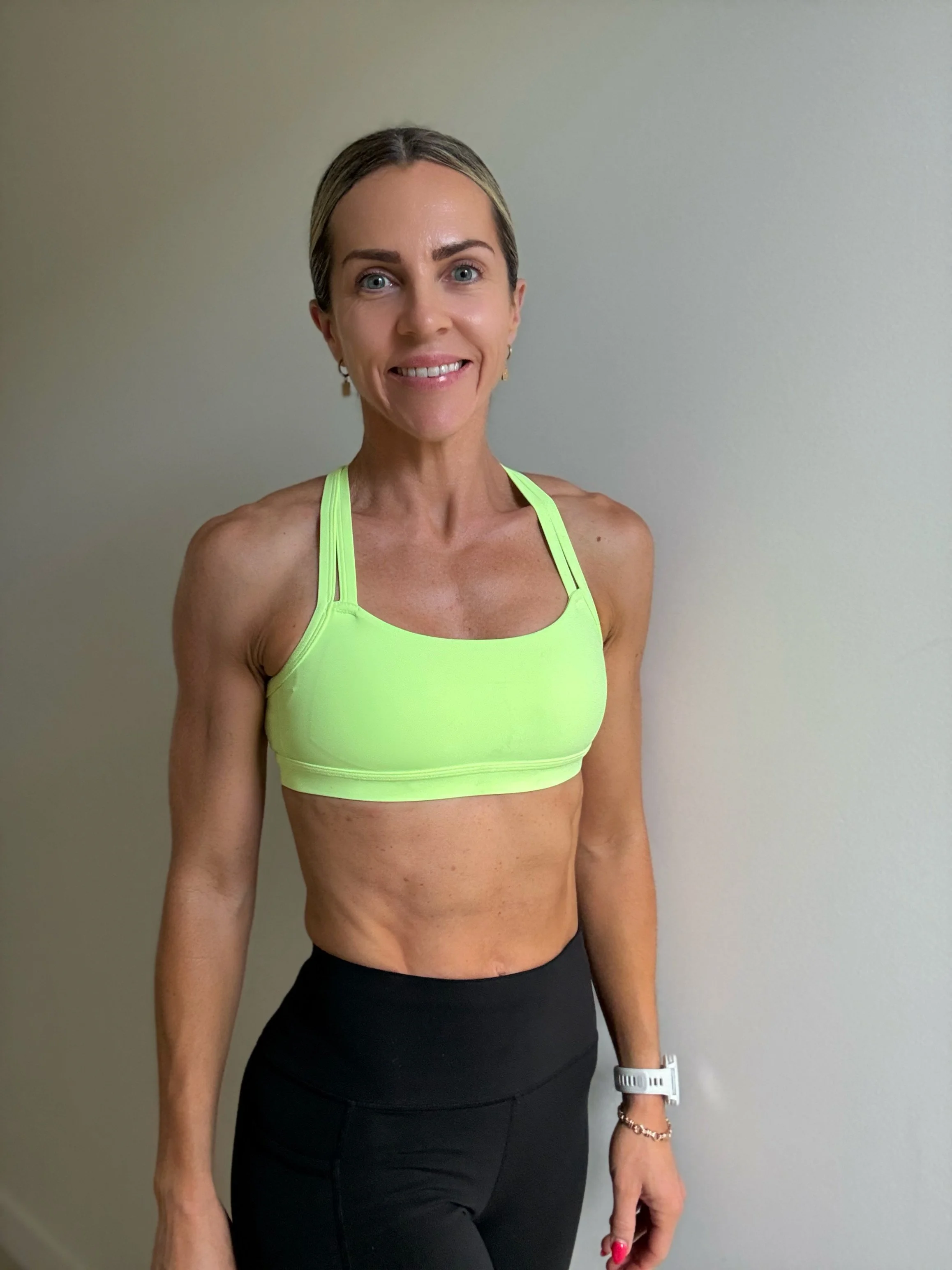
That was several years ago. Now, I love training to compete in pro Hyrox, I am the fittest and strongest I have ever been in my life, and I am forty four years old.
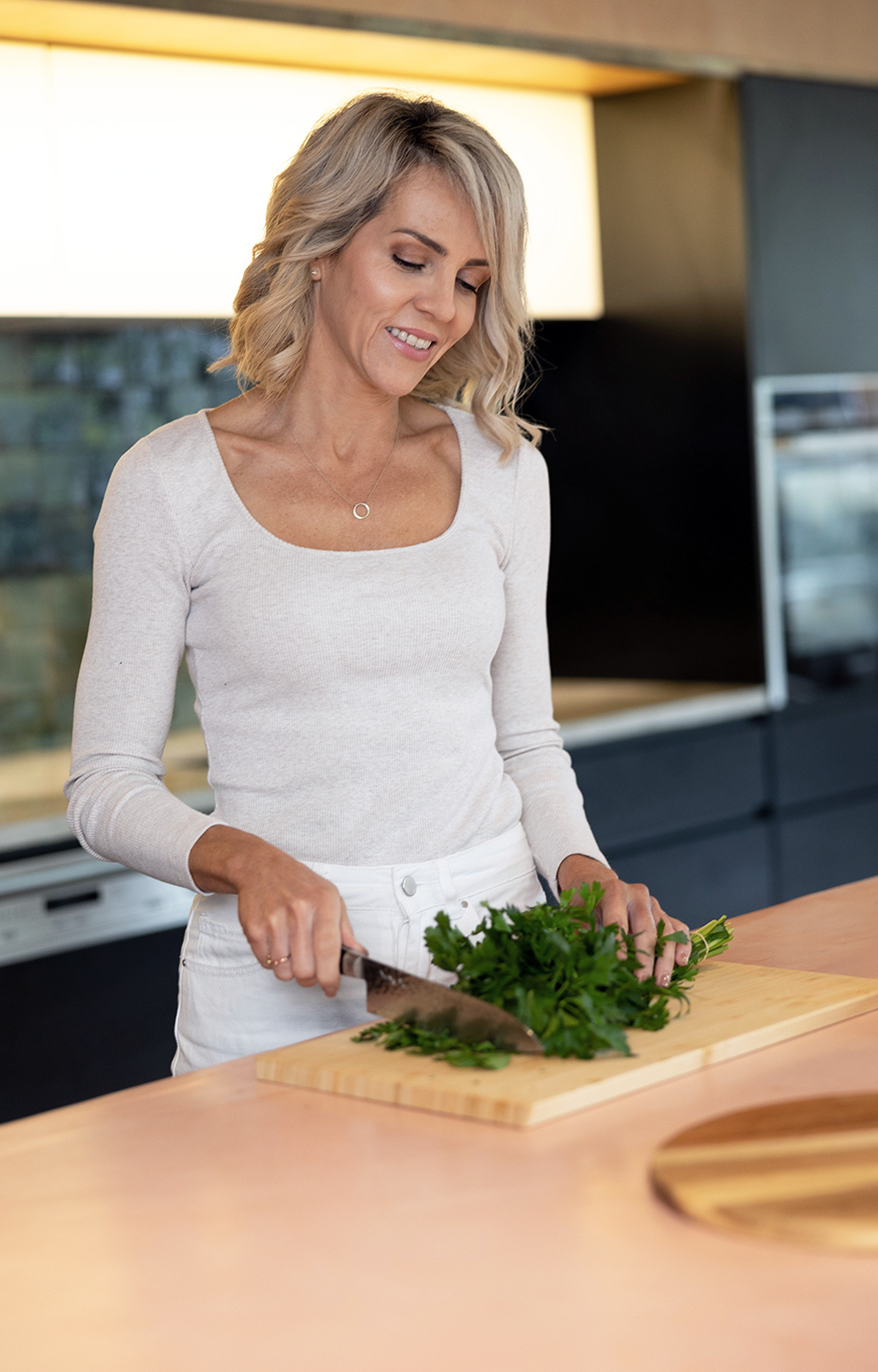
I share this not because I think my journey is remarkable. I share it because I am not some shiny young influencer with a perfect body and a perfectly curated life. I am a somewhat daggy middle aged mum with ankle socks, holes in my leggings and cellulite, who trains at 5am because it is genuinely the only available time slot. And my body is strong. And I feel incredible (most of the time). And I think it matters for women to see their peers doing this — not some aspirational stranger, but someone who looks like them and lives like them and figured it out anyway.
Age is not an obstacle. I want every woman I work with to really believe that. Because I live it every day.
P: Women’s health is finally getting the attention it deserves, and new research is challenging long-held misconceptions around fitness, nutrition, and aging. What’s one recent discovery or shift that excites you most?
R: The shift that excites me most isn't a clinical discovery, its really more of a cultural one.
Women's health has gone from being a slightly awkward topic that people whispered about to being a (genuine) dinner table conversation. Perimenopause, menopause, hormones, bodies, the things that happen to us physically and emotionally through midlife is all out in the open now. And I REALLY love that for us.
I talk to my kids about periods, about menopause, about bodies and health and the things that change as we age. I want to raise sons who truly understand women, who have compassion for the unique things we go through and who never make a woman feel like her health is too complicated or too inconvenient to take seriously. That starts at the dinner table.
For so long women were told their symptoms were anxiety, or stress, or just getting older. That conversation is finally starting to shift. Women are advocating for themselves more loudly. Doctors are listening more carefully and the research is catching up.
We still have a long way to go, but I really feel like the conversation has shifted.
P: At the same time, social media is flooded with health advice — and misinformation. Are there any popular trends or myths around women’s health that you’d love to debunk?
R: This is a real pain point for me. Even as a medical specialist I find the volume of conflicting health information genuinely overwhelming at times. I cannot imagine how it feels if you don't have a clinical background to filter it through.
The thing I would most like to debunk isn't one specific trend. It's the idea that there is a one size fits all solution. The perfect diet. The optimal exercise programme. The protocol that works for everyone. I have been in medicine long enough to understand that the nuance is everything. Not everyone responds to the same treatment, even when that treatment is technically correct. Bodies are complicated. Lives are complicated. What works brilliantly for one person can be completely ineffective for another.
That said, I do have a pet peeve. There is one specific narrative that I feel genuinely passionate about challenging, and that is the idea that cardio is dangerous for women because it raises cortisol. I hear this constantly and it concerns me deeply, because cardiovascular disease is the leading cause of death in women and cardiovascular fitness is one of the strongest predictors of longevity we have. The idea that women should be afraid of raising their heart rate is not only wrong, it is potentially dangerous. Lift heavy and do your cardio. Both. Please.
I actually love being wrong about things. I love when new research lands that challenges something I thought I understood, or when a patient's experience makes me look at things differently. Medicine is a lifelong learning journey and I try very hard not to drink my own Kool-Aid. The moment you stop being curious and open minded is the moment you stop being useful to your patients.
So when women come to me overwhelmed by conflicting advice, what I try to offer is not another definitive answer. It is a way of understanding their own body specifically. Because the best health approach is always the one that works for you, in your life, right now.
R: If there’s one thing you wish every woman understood about her health, what would it be?
P: That it is genuinely not as complicated as the internet has made it feel. (I say this with love but also with mild exasperation!)
The overwhelm and total confusion I see in my patients is real. But it's not because their bodies are mysterious or their situations are uniquely hopeless. It's because they are being hit from every direction with fragmented, often contradictory information and trying to make sense of it without anyone helping them see the whole picture. That is totally exhausting and also not their fault.
But here is what I know after eighteen years of doing this: the body is actually quite logical. It responds to consistent signals over time and boring consistency. It does not respond to dramatic overhauls or white-knuckling your way through something you hate for three weeks before giving up. It responds to small, boring, repeatable things that sneak into your life almost imperceptibly and then one day you look up and realise you feel completely different. Its the 1% at a time approach and annoyingly it actually works.
I also really want women to understand that everything is connected. Sleep affects metabolism. Stress affects hormones. The mental load you carry affects your physical recovery. These are not separate problems. They are the same problem wearing different outfits. For some reason this took me an embarrassingly long time to realize myself. But this is now the approach I take with both myself and in my clinical care.
And it is never too late. I have patients in their sixties rebuilding their health from scratch and absolutely thriving. The biology is on your side if you give it half a chance. You just have to start somewhere, stay consistent and trust that the small things are adding up even when you cannot see it yet.
P: You wear many hats — doctor, entrepreneur, mother. How do you navigate the balance between career and motherhood?
R: Honestly? Often not very well.
I think there is enormous pressure on women to have a convincing answer to this question and to present some elegant system that keeps everything perfectly in order. And I am just not going to do that, because I don't think it serves anyone and also because I think there is beauty in just embracing the fact that you’re a bit of a hot mess.
The truth is that some weeks feel genuinely balanced and some weeks are an absolute disaster. There are days when I feel like a brilliant doctor and a completely inadequate mother, and days when I feel the opposite, and occasionally on a very good Tuesday, both at the same time.
What I have learned, and what I come back to constantly, is that consistency matters infinitely more than perfection. I am not trying to be perfect at any of this. I am trying to show up reliably, make the best decision I can with what I have on any given day, and not be too hard on myself when things fall apart. Because they do fall apart. Regularly. And I’ve come to accept that is just life with a full plate.
The other thing I have learned, the hard way and more than once, is that self care is not selfish. It took me a long time to really believe that. Most of my life has been about giving other people my energy, as a doctor, as a mother, as a partner, as a friend. And there are seasons where that giving has genuinely emptied me out and where I have had nothing left and tried to keep going anyway, which helps nobody.
I am a much better doctor, a much better mother and honestly a much better human when my own needs are met. You cannot pour from an empty cup. I know that sounds like something you'd read on a tea towel but I have lived the truth of it enough times that I say it without embarrassment now. Making sure my own capacity is constantly tended to is not a luxury. It is what makes everything else possible.
And I try to remember on the hard days that my boys are watching. Not watching me be perfect. Watching me try. Watching me get back up. Watching me prioritise my own health even when it is inconvenient. That, I think, is the thing that will actually matter to them one day.
P: Has becoming a mother changed the way you think about health?
R: Completely and in ways I didn't expect.
The obvious answer is that I want to be healthy for them. I want to be around, I want to be present and I want to have the energy to actually show up in their lives rather than just existing in the background of it. That felt true from the moment they were born.
But what surprised me was how much becoming a mother changed the way I think about what health actually looks like. Because you cannot fake it with kids. They see everything. They notice when you are running on empty, when you are irritable and short, when you drag yourself through the day. And they also notice when you are vibrant and strong and genuinely enjoying your life.
I have also learned that health doesn't just mean being well. It means being honest. I tell my boys when I am stressed or run down or having a hard week. I don't perform wellness for them. I think there is something really important about letting your children see that life is not always good and that not feeling okay is a normal and human experience. Honesty is healthy. Failing is health. That is something I genuinely believe.
My greatest joy at the moment is running with my boys. We do parkrun together as a family and I cannot adequately describe how full it makes my cup. There is something about moving alongside them, about them seeing their mum strong and capable and choosing to prioritise her body, that feels important in a way that goes beyond my own health.
I want to raise boys who see women as strong. Who grow up knowing that their mother ran races and lifted weights and took her health seriously not because she was trying to look a certain way but because she understood what her body was capable of and she respected it. I think that matters for how they will see and treat the women in their own lives one day.
P: And our final question, which we always ask: what does being a woman mean to you?
R: Being a women is the hardest thing and the most amazing thing. Often at the same time.
The complexity of our bodies alone is extraordinary. The way we change in stages, the way we can give life and nurture life, the way our physiology is dynamic and responsive in ways that medicine is only beginning to fully understand and appreciate. I find it genuinely awe-inspiring, even after nearly two decades of studying it.
We are also deeply connected to one another in a way that I think is uniquely female. We are asked to do extraordinary things and by nature we are built to give. That is a privilege. But it can also become a burden if we never learn to turn that nurturing inward. Self care is not selfishness. I believe that completely. When we build our own capacity, we have so much more to give to everyone around us. The two things are not in conflict. They are the same thing.
And the other thing that genuinely excites me about being a woman is aging. I know that might sound strange in a culture that treats aging as something to be managed or minimised. But I look at the older women in my life and I see something I deeply want. A confidence. A grace. A freedom that comes from having earned your years and stopped apologising for taking up space.
I have no fear of growing older. I intend to be fitter and stronger and more unapologetically myself with every passing year. I want to be the kick-ass granny out-lifting the twenty year old boys in the weight room.
That feels like something worth looking forward to.